Understanding Omni-Channel Retail

Omni-Channel Retail - What is it?
Lighthouse Commerce Solutions is a Wisconsin based consultancy specializing in SEO, AIO, e-Commerce growth, and social media marketing. We achieve success through the leveraging of AI technology and usage of cutting edge tools while filling it with real-life human context. This translates to long term success in the ever changing online landscape.
Understanding Modern Retail in 2026
Modern retail as we know it today can be clearly defined as online and physical retail. In 2025 approximately 59% of consumers preferred shopping online while 41% preferred in-person shopping experiences. While we have seen the continual growth of online sales and eCommerce they only combined to make up about 21% of global sales with a projected increase to 22.5% by 2028. We can see the future is not simply one or the other but rather both. This mixing of physical and online e-Commerce is called Omni-Channel Retail.
Online e-Commerce
As of Q4 of 2024, eCommerce made up roughly 16.4% of the total retail sales in the United States. While this number seems small, it is a clear signal that there is incredible space to grow. Being in the online space, we can leverage SEO and AIO to take advantage of modern business processes. As mentioned in our blog about SEO in 2026, most people still use traditional search engines. Knowing this, we see most online buyers research the products that interest them prior to buying, up to 80% of consumers check social media, websites, and other apps before making their final decision. In addition to using traditional search engines, being able to leverage AIO in order to optimize AI prompts and AI searches for the customer to learn more about any potential purchase further adds to this. Finally, up to 70% have made final purchases on social channels with nearly 30% purchasing on the same day they discover a product. All this to say, online e-Commerce is a dynamic space with an ever increasing room to grow.
Physical Retail of Today
Mentioned above in Online eCommerce, online sales made up only 16.4% of total retail sales in the United States, signaling that the physical retail store is still vital to the overall shopping experience. In 2025, business owners have seen that 73% of consumers go between online and physical stores multiple times before making an online buying decision. This is a significant number as it shows the importance of physical stores. In an ever “online” age, it’s easy to dismiss the notion of physical spaces but what we are seeing here with the numbers is that there is still life and a place for physical locations. To understand what is omni-channel retail is to understand what physical retail’s place is in the ever changing commercial landscape. Physical retail spaces are ideal for creating an experience for customers that cannot be had through the internet. To succeed in this space requires a change of thinking, a physical space needs to be experiential. We can see this by looking at some of the successful retailers around the world such as Apple, Tesla, or even the high fashion labels such as LV. While selling great products, they are also “selling” an experience.
Omni-Channel Retail
Now that we have set the stage, let’s table the topic: What is omni-channel retail? In simple terms, omni-channel retail refers to retail that is made through multiple means and methods. The ability to leverage the dynamic online environment while enhancing it with in-store experiences is an example of this. An industry leader that has pioneered this early is Target. The idea of buying online then opting for a curb side pick up, seems so prevalent today but it was Target that popularized this. Target was able to leverage its extensive store network to allow customers to buy online and drive to a store to pick up their product. This revolutionized how retail was done, in so much that even its competitors are doing the same. Changing how we view physical stores as assets is a prime example of how omni-channel retail works today. Another example of this on a smaller scale are store-in-store concepts. Boutique brands or labels will often work with other larger retailer to host experience days that tie into their online platforms. The simple act of “present this code” from an online purchase at our pop-up store or store-in-store location for a special discount or experience is seen quite often as well.
How Does Omni-Channel Retail Help Me?
Omni-channel retail allows for a business to scale and branch out. Creating a high traffic website that sells great products is only one part of the equation, being able to create an experience for your customers is the other. The modern day customer has become very discerning. While the product is king, service and experiences will dictate if you will have a one and done customer or if you will have returning business. You are also starting to see the rise of a far more tech savvy customer base as well with the younger generations beginning to grow in spending power. This is signaling to a future where a customer base will want the ease and convenience of online retail combined with great in-person experiences. The scaling comes in when you are able to find the right formula that works for you.
Conclusion
Being able to leverage all the tools we have on hand allows for us to have deep insight into how omni-channel retail works in 2026. The ability to take advantage of world class SEO and AIO doesn’t simply just allow us to drive web traffic but it gives us insights into what customers are looking to experience. Examples we gave such as in-store pick ups or in-store promotions are only a small fraction of what can be done in this space. If you are reading this and would like to learn more, schedule a free consultation HERE! We at Lighthouse Commerce Solutions offer comprehensive Omni-Channel Retail consultation and strategy services. Please click HERE to learn more.
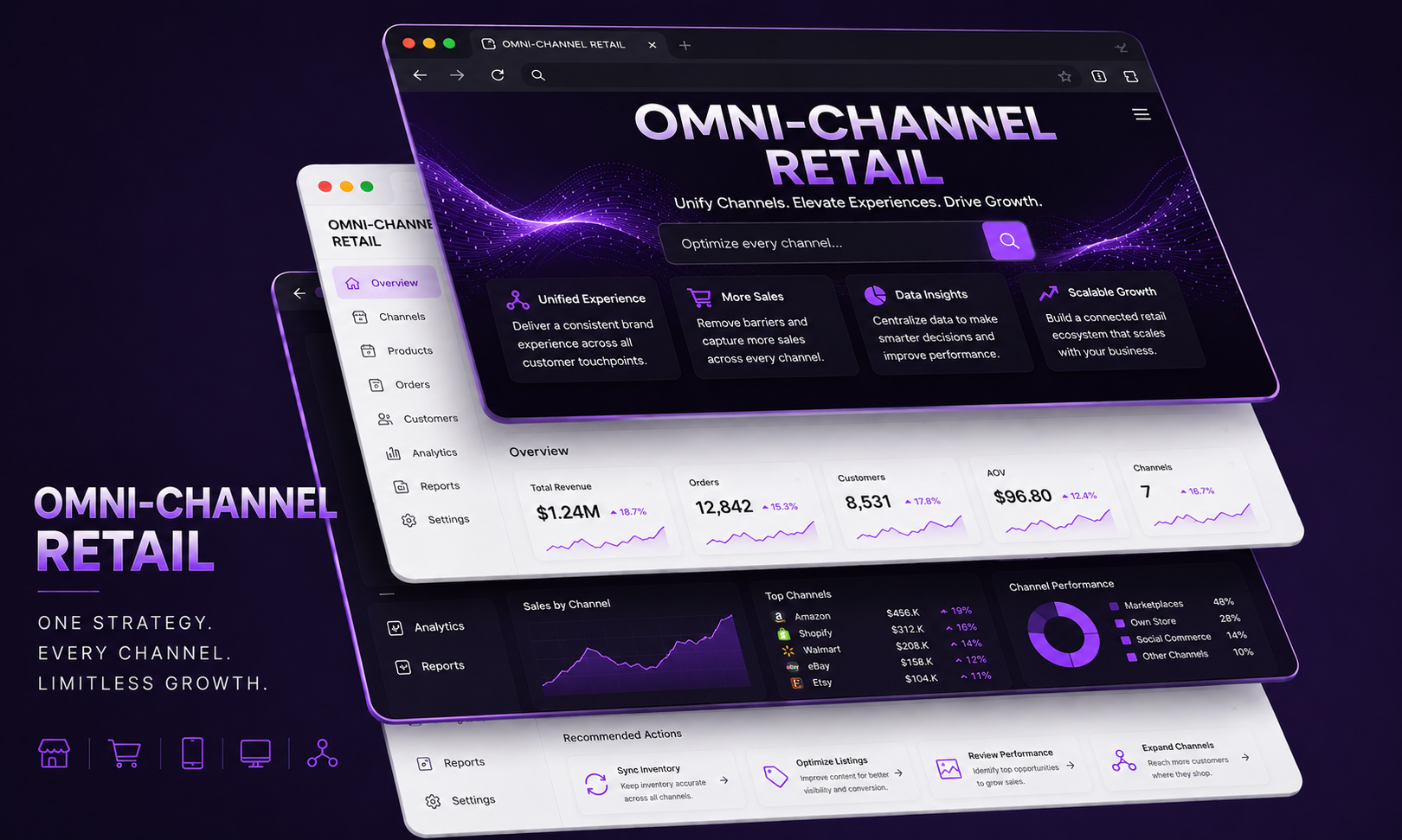
Marketplace Optimization is a core service offered by Lighthouse Commerce Solutions. Please reach out to learn more.
